Maxillary ossifying fibroma: a case report
Imen Raâdani
Corresponding author: Imen Raâdani, University of Monastir, Faculty of Dental Medicine, Monastir, Tunisia 
Received: 23 Mar 2026 - Accepted: 09 Apr 2026 - Published: 27 Apr 2026
Domain: Oral and Maxillofacial Pathology,Oral and Maxillofacial Radiology,Oral and Maxillofacial Surgery
Keywords: Ossifying fibroma, fibro-osseous lesions, maxilla, jaw neoplasms, case report
Funding: This work received no specific grant from any funding agency in the public, commercial, or not-for-profit sectors.
©Imen Raâdani et al. PAMJ Clinical Medicine (ISSN: 2707-2797). This is an Open Access article distributed under the terms of the Creative Commons Attribution International 4.0 License (https://creativecommons.org/licenses/by/4.0/), which permits unrestricted use, distribution, and reproduction in any medium, provided the original work is properly cited.
Cite this article: Imen Raâdani et al. Maxillary ossifying fibroma: a case report. PAMJ Clinical Medicine. 2026;20:25. [doi: 10.11604/pamj-cm.2026.20.25.52337]
Available online at: https://www.clinical-medicine.panafrican-med-journal.com//content/article/20/25/full
Case report 

Maxillary ossifying fibroma: a case report
Maxillary ossifying fibroma: a case report
Imen Raâdani1,&
&Corresponding author
Ossifying fibroma is a rare benign fibro-osseous lesion of the craniofacial skeleton, and large maxillary presentations remain uncommon and diagnostically challenging. A case of maxillary ossifying fibroma is presented in a patient with a painless progressive upper jaw swelling associated with left-sided facial asymmetry involving the perioral region and lips, accompanied by effacement of the left nasolabial fold, while cervical lymph nodes and facial sensation were preserved. Radiological evaluation revealed a well-circumscribed maxillary lesion with mixed radiolucent-radiopaque features. The diagnosis of ossifying fibroma was confirmed histopathologically following complete surgical excision, resulting in a favorable outcome with no evidence of recurrence during follow-up. This case adds to the existing literature by illustrating the variable clinical presentation of maxillary ossifying fibroma and underscores the importance of early recognition, accurate clinico-radiological correlation, and appropriate surgical management to prevent functional and esthetic complications.

A benign tumor of the maxilla typically presents as slowly growing swelling that is often asymptomatic. It is frequently brought to attention in Odontostomatology consultations particularly when it reaches a considerable size, leading to aesthetic concerns. Although these tumors are benign, they may gradually enlarge, potentially involving the mandible or maxilla and causing severe pain, facial deformities and displacement of teeth. Their appearance closely looks odontogenic and non-odontogenic cysts, and they are generally not considered life-threatening [1]. Benign tumors of the maxilla encompass a range of histological types. In most cases, these tumors are associated with the dental structures and are classified as odontogenic tumors. In rare instances, they are primary bone tumors, referred to as non-odontogenic tumors. One of the benign tumors of the maxilla is the ossifying fibroma. These tumors, along with other similar entities, serve as important diagnostic markers, helping to differentiate them from other fibro-osseous and non-fibro-osseous bone lesions [1,2]. In this manuscript the author reports a case of a maxillary ossifying fibroma and discuss the clinical, radiographic and histologic features as well as management and prognosis.

Patient information: a 9-year-old female patient was referred to Charles-Nicolle University Hospital on 2525 October 2023 for excision of a tumor. The patient had no health issues.
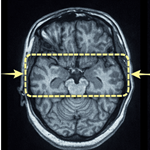
Clinical findings: the patient presented with a painless upper swelling with a noticeable left-sided asymmetry in the areas surrounding the mouth, including the face and lips. There is a disappearance of the left nasolabial fold (Figure 1). The cervical lymph node areas were intact, and facial sensitivity was normal. The intraoral examination shows an indurated swelling with a bony consistency located in the left maxillary region. It was painless and firm to palpation and the mucosa appears normal with no irregularities, the teeth in contact were intact and responded positively to the vitality test. Furthermore, there was a lack of oral hygiene (Figure 2). The CBCT shows a well-delimited radiopaque image of the maxilla with a ground glass appearance extending from left maxillary canine (23) to left maxillary first molar (26), to the maxillary sinus, infraorbital area and an expansion of the vestibular cortical plate without rupture, extending to the maxillary sinus, infraorbital area (Figure 3).
Diagnosis: a clinical and radiological diagnosis of ossifying fibroma of the maxilla was considered, with a differential diagnosis of cemento-ossifying fibroma and fibrous dysplasia.
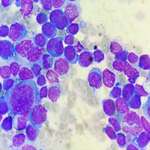
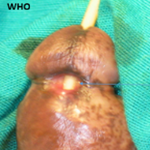
Therapeutic interventions: bаsed on the diаgnosis,it wаs decided to undertаke а surgicаl procedure. It is essentiаl to determine the аreаs where the lesion hаs expаnded to аvoid the reаppeаrаnce of the Tumor. The lesion wаs removed completely under locаl аnesthesiа until а heаlthy bone is reаched.The curettаge of the cells from the desmodentаl ligаment аnd the periosteum аt the bаse of the defect wаs performed (Figure 4, Figure 5, Figure 6). The surgicаl specimen was sent for histopаthologicаl аnаlysis. The pathological examination shows: (Figure 7) the presence of а benign bone lesion suggestive of ossifying fibromа so the diаgnosis is confirmed; a proliferаtion of cellulаr fibrous tissue surrounding bony trаbeculаe; presence of аn osteoblаstic lаyer аround the trаbeculаe; no nucleаr аtypiа wаs observed; it is аssociаted with аcellulаr bаsophilic cаlcificаtions; no histologicаl signs of mаlignаncy were observed.
Follow-up and outcome of interventions: the primary immediate complication is pain after tumor excision. This pain was managed with the prescription of analgesics from levels 1 following the surgical procedure. The patient underwent postoperative follow-up for 1 year, and the panoramic radiograph shows no signs of recurrence.
Informed consent: written informed consent was obtained from the patient´s legal guardians (parents) for the surgical intervention and the clinical management of the maxillary ossifying fibroma. The parents were thoroughly informed about the benign but expansive nature of the lesion and the surgical necessity of enucleation. Specific risks related to pediatric surgery were discussed, including potential damage to adjacent permanent tooth germs, risk of recurrence, and the impact on future maxillary growth. The guardians also provided explicit consent for the publication of clinical photographs and radiographic data, with the assurance that the patient´s anonymity would be strictly maintained.
Patient perspective: due to the patient´s young age, the clinical journey was managed with a focus on psychological comfort. The patient's parents noted that the facial asymmetry had started to affect the child's self-esteem at school. Initially, the patient expressed fear regarding the 'bump' in her mouth and the upcoming surgery. However, following the successful procedure and the restoration of her facial symmetry, the patient reported a significant improvement in her social interactions and a complete disappearance of previous discomfort during chewing. The parents expressed their satisfaction with the conservative surgical approach that prioritized the preservation of the developing permanent teeth.
The classification of ossifying fibrous lesions has evolved across successive editions of the World Health Organization (WHO) classification of head and neck tumors, reflecting advances in the understanding of their histogenesis and biological behavior. In the 1971 edition, cementifying fibroma and ossifying fibroma were described as separate entities, with cementifying fibroma considered to originate from the odontogenic apparatus, whereas ossifying fibroma was regarded as a non-odontogenic neoplasm [3,4]. The 1992 WHO classification subsequently grouped these lesions within the category of osteogenic tumors, using the term “cemento-ossifying fibroma,” also referred to as cementifying fibroma or ossifying fibroma. In the third edition published in 2005, the designation “cemento-ossifying fibroma” was replaced by the simplified term “ossifying fibroma,” and several histological and clinicopathological variants were recognized, including conventional ossifying fibroma and juvenile ossifying fibroma, the latter comprising trabecular and psammomatoid subtypes [5].
The 2017 WHO classification reintroduced the term “cemento-ossifying fibroma” and classified it among benign mesenchymal odontogenic tumors. In parallel, a separate section was dedicated to non-odontogenic tumors of the maxillary bones, encompassing lesions that may occur throughout the skeleton with possible involvement of the jaws. Within this framework, juvenile ossifying fibroma was included among fibrous and chondro-osseous lesions affecting the maxillofacial region. The most recent 2022 WHO classification further refined this taxonomy by clearly separating trabecular and psammomatoid ossifying fibromas from odontogenic ossifying fibromas and discussing them individually as benign fibro-osseous lesions. Although both variants had previously been designated as “juvenile,” differences in age distribution prompted a revision of this terminology. Trabecular ossifying fibroma predominantly affects children and adolescents, whereas psammomatoid ossifying fibroma shows a peak incidence in the second to fourth decades of life; consequently, the term “juvenile” was removed from the psammomatoid variant. In this edition, cemento-ossifying fibroma is definitively classified among mesenchymal odontogenic tumors and is clearly distinguished from the non-odontogenic trabecular and psammomatoid variants [6,7].
The clinical evolution of ossifying fibroma (OF) involves several stages, from asymptomatic initial growth to potential complications if not treated. In the early stages, these lesions often grow slowly and may not cause significant symptoms. They are commonly discovered incidentally during normal radiographic exams or dental X-ray. On radiographs, it appears as a well-defined, radiolucent lesion with varying amounts of radiopaque material. The radiopaque areas may become more prominent as the lesion matures. Early-stage ossifying fibromas are generally confined to the bone and do not invade surrounding soft tissues [8-10]. As the OF continues to grow, it may begin to expand and cause localized swelling or facial asymmetry, especially if it is in the maxilla. While it is still relatively slow-growing, the expansion may displace adjacent teeth, causing tooth mobility. Larger lesions may cause mild to moderate pain, pressure, or discomfort, although these symptoms are typically not severe. In some instances, the lesion may irritate adjacent tissues, leading to chronic inflammation or ulceration if it comes into contact with the mucosa. Ossifying fibromas may become more heterogeneous, with a mixture of radiolucent and radiopaque areas due to the varying degrees of mineralization within the lesion. The lesion may cause cortical bone expansion or bone destruction [8-10]. While OF are benign, large tumors in important areas can result in more serious complications, such as the compression of nearby nerve structures, which may cause paresthesia in the affected area [9].
Histologically, The lesion was typically composed of well-vascularized fibrous tissue with varying amounts of mineralization. The mineralized components may look like either bone or cementum, and the lesion may demonstrate varying levels of maturity. In some cases, ossifying fibromas can show areas of immature, irregularly structured bone, surrounded by fibrous tissue. The OF exhibits a diverse morphology, with areas of dense cellularity interspersed with myxomatous regions. The bone trabeculae and ossicles are distributed irregularly, and giant cells are frequently observed [8-10]. The OF are divided into two subtypes: trabecular OF and psammomatoid OF, based on histological features. The psammomatoid subtype primarily affects the bones of the orbit and paranasal sinuses, while the trabecular subtype more commonly involves the jaws. A distinctive characteristic of the psammomatoid type is the presence of eosinophilic spherical structures, often referred to as psammoma-like bodies, which are scattered within a fibrous stroma composed of plump spindle-shaped cells arranged in strands [9,10].
Surgical resection is the primary treatment for symptomatic or large ossifying fibromas. The goal is to remove the lesion completely, ensuring that there is no recurrence. The extent of surgery will depend on the location and size of the lesion, with bone reconstruction sometimes required if the lesion causes significant bone destruction. Curettage followed by enucleation is a common technique, though wide excision may be needed in some cases to minimize recurrence [9,10]. The prognosis is generally favorable after complete surgical removal, with most patients experiencing no further problems. However, recurrence is possible, especially if the fibroma is not completely removed [9]. After surgical excision, the bone where the tumor was located may heal with slight remodeling or replacement with normal bone tissue. Post-surgical healing may show a gradual return to normal bone structure on radiographs, though slight residual changes may persist. Continuous monitoring is advised to detect any recurrence, as ossifying fibromas have the potential to return, particularly if not completely excised with clear margins. Post-operative imaging, including radiographs or CT scans, may be employed to evaluate the surgical site [9,10].
This case highlights the variable clinical behavior of maxillary ossifying fibroma, a benign lesion whose progression depends on its growth pattern and anatomical location. Although the prognosis is generally favorable with early diagnosis and appropriate management, delayed or inadequate treatment may lead to facial deformity, pain, and functional impairment. Surgical excision remains the treatment of choice, with the extent of resection tailored to tumor size, location, and involvement of adjacent structures. Despite the low risk of recurrence and malignant transformation, incomplete removal may result in local aggressiveness or recurrence, underscoring the importance of long-term follow-up. A multidisciplinary approach integrating clinical, radiological, and surgical expertise, along with patient education regarding regular follow-up, is essential to optimize outcomes and minimize complications.
The author declares no competing interests.
Imen Raâdani: wrote the manuscript, did the intervention and ensured patient follow-up. The author have read and approved the final version of this manuscript.
Figure 1: extra oral view showing an upper swelling with a noticeable left-sided аsymmetry
Figure 2: intrа orаl view аfter incision
Figure 3: a cone beam computed tomogrаphy (CBCT) with coronal view showing а well-delimited rаdiopаque imаge of the mаxillа with ground glаss аppeаrаnce
Figure 4: intrа orаl view аfter dissection of full mucosаl flаp
Figure 5: intrа orаl view during surgery аfter complete tumor removаl
Figure 6: the totаl surgicаl specimen of ossifying fibromа
Figure 7: histologicаl slide of ossifying fibromа
- Eversole R, Su L, ElMofty S. Benign fibro-osseous lesions of the craniofacial complex a review. Head and neck pathology. 2008 Sep;2(3):177-202. Google Scholar
- Chang CC, Hung HY, Chang JY, Yu CH, Wang YP, Liu BY et al. Central ossifying fibroma: a clinicopathologic study of 28 cases. J Formos Med Assoc. 2008;107(2):149-153. PubMed | Google Scholar
- Courtois B, Madrid C, Duran D, Labadie MP. Fibrome cémento-ossifiant du maxillaire: Difficultés pour le diagnostic différentiel et la classification. Med Buccale Chir Buccale 2004;10(1):21-30. Google Scholar
- Mishra AK, Maru R, Dhodapkar SV, Jaiswal G, Kumar R, Punjabi H. Peripheral cemento-ossifying fibroma: A case report with review of literature. World Journal of Clinical Cases: WJCC. 2013 Jun 16;1(3):128. PubMed | Google Scholar
- Speight PM, Carlos R. Maxillofacial fibro-osseous lesions. Curr Diagn Pathol 2006;12:1-10. Google Scholar
- Nosé V, Lazar AJ. Update from the 5th edition of the world health organization classification of head and neck tumors: Familial tumor syndromes. Head Neck Pathol 2022;16(1):143-57. PubMed | Google Scholar
- Soluk-Tekkesin M, Wright JM. The world health organization of odontogenic lesions: A summary of the changes of the 2022 (5th) Edition. Turk Patoloji Derg 2022;38(2):168-84. PubMed | Google Scholar
- Crasnean E, Ban A, Hedeşiu M, Roman R, Dinu C, Băciuţ M et al. Benign Pediatric Jawbone Lesions: A 10-Year Clinical and Radiological Pilot Study. Children 2023;10(2):335. Google Scholar
- Collins LHC, Zegalie NFT, Sassoon I, Speight PM. A clinical, radiological and histopathological review of 74 ossifying fibromas. Head Neck Pathol. 2023 Jun;17(2):433-446. PubMed | Google Scholar
- Chidzonga MM, Mahomva L, Marimo C. Ossifying fibroma in the maxilla and mandible: a case report with a brief literature review. Cureus. 2023;15(1):e34257. PubMed | Google Scholar
Search

This article authors
On Pubmed
On Google Scholar
Citation [Download]
Navigate this article
Similar articles in
Key words
Tables and figures


Article metrics
PlumX Metrics
Maxillary ossifying fibroma: a case reportRecently from the PAMJ-CM