Salvage surgery outcomes following circumcision mishaps in Southeastern Ghana: development, internal validation and external validation of a prognosticating model
Frank Obeng, Sylvester Appiah Boakye
Corresponding author: Frank Obeng, Department of Surgery, Urology Unit, UHAS, Ho, Ghana 
Received: 13 May 2025 - Accepted: 09 Apr 2026 - Published: 28 Jul 2026
Domain: Health system development,Pediatric surgery,Urology
Keywords: Circumcision complications, circumcised hypospadias, salvage surgery, urethroplasty, logistic regression, referral timing
Funding: This work received no specific grant from any funding agency in the public, commercial, or non-profit sectors.
©Frank Obeng et al. PAMJ Clinical Medicine (ISSN: 2707-2797). This is an Open Access article distributed under the terms of the Creative Commons Attribution International 4.0 License (https://creativecommons.org/licenses/by/4.0/), which permits unrestricted use, distribution, and reproduction in any medium, provided the original work is properly cited.
Cite this article: Frank Obeng et al. Salvage surgery outcomes following circumcision mishaps in Southeastern Ghana: development, internal validation and external validation of a prognosticating model. PAMJ Clinical Medicine. 2026;21:22. [doi: 10.11604/pamj-cm.2026.21.22.47942]
Available online at: https://www.clinical-medicine.panafrican-med-journal.com//content/article/21/22/full
 PDF in process
Research 

Salvage surgery outcomes following circumcision mishaps in Southeastern Ghana: development, internal validation and external validation of a prognosticating model
Salvage surgery outcomes following circumcision mishaps in Southeastern Ghana: development, internal validation and external validation of a prognosticating model
 Frank Obeng1,2,&, Sylvester Appiah Boakye1
&Corresponding author
Introduction: circumcision is a widely practiced surgical procedure, especially in African settings where it carries significant cultural and public health relevance. However, complications-especially those arising from procedures conducted under non-medical conditions can be severe and require urgent interventions. This study analyses the outcomes of salvage surgeries performed for circumcision complications referred to the Ho Teaching Hospital, in Southeastern Ghana.
Methods: a retrospective review was conducted of 23 complication cases of circumcisions that underwent salvage surgery between January 2019 and December 2023. Data on patient demographics, circumcision providers, complication types, surgical interventions, and outcomes were analyzed. Associations between clinical and sociodemographic factors with salvage surgery outcomes were assessed using Chi-square tests and logistic regression. A logistic regression model linking salvage surgery outcomes (dependent variable) to various clinical and socio-demographic variables (independent variables) was derived from the data. The data was internally and externally validated and converted into a clinical decision support tool.
Results: a total of 29 salvage procedures were performed (for the 23 complications), with circumcision revision being the most common (34.5%) and achieving a 100% success rate. Urethroplasty or hypospadias repair accounted for 24.1% of cases, with a lower success rate of 42.9%. All other procedures including fistulectomy with primary repair (13.8%), debridement (10.3%), meatotomy/meatoplasty (10.3%), and glansplasty/flap closure (6.9%) had 100% success rates. Statistically significant associations were found between salvage surgical outcomes and referral timing (p < 0.001), circumcision provider (p < 0.001), and parental occupation (p = 0.006). A logistic regression model was derived to estimate the likelihood of successful salvage surgery, and internally and externally validated. The model showed moderate internal performance with 68.2% accuracy, good precision (72.4%), and balanced F1 score (72.7%), supported by acceptable discrimination (AUC 0.70), good fit (Hosmer-Lemeshow p = 0.684), and no multicollinearity (VIF 1.2-3.3). External validation yielded 72.7% accuracy, 78.6% sensitivity, and AUC of 0.69, confirming consistent and generalizable performance. A preliminary bedside tool for prognosticating salvage surgery outcomes (for complicated circumcisions) was innovated from the model.
Conclusion: prompt referral and surgical expertise are critical in improving outcomes of corrective surgery following circumcision complications. Clinicopathological, socioeconomic, and demographic factors also influence these outcomes, and are utilizable in the developed bedside clinical scoring tool. Policy interventions focusing on early referral pathways, public education on the avoidance of circumcision in hypospadias, and training for traditional circumcisers are recommended.

Circumcision is one of the most frequently performed surgical procedures worldwide, particularly in sub-Saharan Africa where it holds cultural, religious, and preventive health importance. While generally considered safe, the risk of complications increases significantly when performed by untrained personnel or in non-sterile environments. Complications may range from minor swelling and infection to life-altering injuries such as glans amputation, urethral fistulas, and extensive tissue necrosis [1-4]. A study by Ouattara et al. (2023), titled ´Complications of non-medical assisted circumcision in Burkina Faso: Clinical presentation, management, and outcomes´: reviewed complications from non-medical assisted cultural circumcisions in Burkina Faso. Findings revealed significant morbidity and mortality associated with traditional circumcision practices, underscoring the need for safer procedures and better post-operative care [5]. Okeke et al. studied the Epidemiology of complications of male circumcision in Ibadan, Nigeria. They examined 370 male infants in Nigeria, finding a 20.2% complication rate from circumcisions, including excessive loss of foreskin and glans amputation [6]. The research highlights the necessity for standardized training and protocols to minimize such complications.
In Ghana and many similar settings, a considerable proportion of circumcisions are still conducted by traditional practitioners (wanzams) or non-specialist health workers. The absence of formal training and adherence to sterile techniques in such circumstances results in higher complication rates, often requiring specialist interventions. A retrospective study by Appiah et al. (2016) at the Komfo Anokye Teaching Hospital reported urethrocutaneous fistulas as the most common complication, followed by glans amputations and iatrogenic hypospadias [7]. Despite the increasing number of reported complications, little has been published on the systematic outcomes of initial surgical management in regional teaching hospitals. The existing literature has largely focused on clinical presentations and surgical techniques, with limited emphasis on how provider type, referral timing, and patient sociodemographic characteristics influence management outcomes. Moreover, few studies offer quantitative models (which could yield clinical scoring systems) to help predict salvage surgery success based on these variables, as viable bedside decision support tools.
This study aims to address these gaps by evaluating the outcomes of initial management strategies for circumcision complications at Ho Teaching Hospital. It also assesses the influence of sociodemographic factors, the type of circumciser, and referral timing on surgical outcomes and introduces a very preliminary predictive model (Annex 1) to potentially assist clinical decision-making on such complications. The specific objectives of this study were to document the initial management strategies employed in response to circumcision complications at Ho Teaching Hospital; to identify the associations between socio-demographic factors, pathological factors, clinician factors and salvage surgery outcomes for circumcision complications; to evaluate how these variables perform within a primordial predictive model for the outcome of salvage surgeries for circumcision complications.
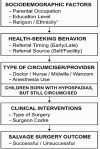
This study is grounded in a multilevel conceptual framework that examines how clinical, sociodemographic, and health system variables interact to influence the outcome of salvage surgeries following circumcision-related complications. At the individual level, patient age, ethnicity, and parental characteristics (education, religion, occupation) shape health-seeking behavior and access to early intervention. At the provider level, the type and training of the circumciser (medical professional vs. traditional practitioner) significantly affects complication salvage outcomes. At the system level, factors such as referral timing, facility readiness, and the cadre of the managing surgeon contribute to variation in surgical outcomes (Figure 1).
The framework assumes that successful salvage surgery results from the alignment of; early recognition and timely referral (system-level responsiveness), skilled surgical intervention (provider-level capability) and informed and initiative-taking caregiver support (individual-level agency). The effect of the pathological misfortune of circumcised hypospadias is also considered. These variables are incorporated into the study´s statistical analysis, culminating in a primordial logistic regression model (Annex 1) designed to predict the likelihood of successful surgical outcome based on these interconnected domains. The interaction of the various determinants to determine salvage surgery outcomes is depicted in the conceptual framework diagram (Figure 1).

Study design: this was a retrospective, observational study conducted at the Urology Unit of Ho Teaching Hospital, Ghana. Medical records from January 2019 to December 2023 were reviewed for all patients who underwent circumcision and were later referred to the teaching hospital due to complications.
Study population and eligibility criteria
Participants: a total of 186 male infants and children were circumcised during the study period, out of which 23 developed complications requiring further management. Inclusion criteria included all children aged 0-12 years who developed post-circumcision complications and received surgical intervention. Exclusion criteria included patients with incomplete records, follow-up less than one month post-intervention, or complications unrelated to circumcision.
Data collection: patient demographic characteristics (age, ethnicity, parental religion, education, and occupation), circumcision provider (doctor, nurse, midwife, traditional circumciser), time of presentation (≤48 hours or >48 hours), referral source (self or facility), type of complication, and type of salvage surgery were recorded. The anesthesia type used and the surgical technique were also documented.
Surgical interventions: salvage procedures included circumcision revision, debridement, meatotomy, glansplasty, urethroplasty, and fistulectomy. Surgical success was defined as complete resolution of the complication without the need for secondary intervention. Failures included persistent complications or reoperation. Salvage procedures were done under general anesthesia, and local anesthesia was not used in any.
Statistical analysis: Chi-square tests were used to assess associations between categorical variables. MANOVA was used to determine predictive relationships. A logistic regression model was developed to quantify the likelihood of salvage surgery success. All analyses were conducted at a 5% significance level.
Ethics clearance: ethical approval for this study was granted by the Research Ethics Committee of the University of Health and Allied Sciences (UHAS-REC), with Protocol Clearance Number UHAS-REC A.10 [103] 23-24). All methods were performed in accordance with the relevant institutional guidelines and regulations, as outlined in the ethical approval. The need for informed consent was waived by the Research Ethics Committee of the University of Health and Allied Sciences (UHAS-REC) due to the retrospective nature of the study and the use of anonymized data extracted from hospital records.
Participants: of the 186 circumcised patients, 23 (12.4%) developed complications requiring further intervention. The most frequent complications were bleeding with anatomical damage (8 cases), infections with structural injury (5 cases), and anatomical deformity alone (10 cases) (Table 1).
Descriptive data: a total of 29 salvage surgical procedures were performed for the 23 patients. The most common was circumcision revision (10 cases, 34.5%), followed by urethroplasty (7 cases, 24.1%), and fistulectomy with primary repair (4 cases, 13.8%). Other procedures included meatotomy, meatoplasty, debridement, glansplasty, and flap closures. The success rate across all salvage surgeries was 70%. Failures were primarily linked to urethroplasty and hypospadias repair procedures, with causes of failure including flap breakdown or persistent fistula. Success was highest among salvage surgeries performed by senior specialists and in cases with early referral (≤48 hours), (Table 2).
Outcome data: significant associations (Table 3) were found between surgical success and referral timing (p < 0.001), circumcision provider type (for the primary circumcision procedure, (p < 0.001), parental occupation (p = 0.006), and clinician performing surgery (p = 0.0016). Further multivariate analysis confirmed referral delay and circumciser expertise as the most influential predictors (MANOVA eta-squared values of 0.682 and 0.490, respectively) (Table 4).
Other analysyis
Predictive modelling: a logistic regression model was derived using the various predictors identified from Table 3. The prediction model was developed using multivariable logistic regression analysis. The final regression model, variable coding, model coefficients, and validation statistics are presented in Annex 1. Data from the 23 complicated circumcision cases, which underwent salvage surgical procedures in the study was used. The model is shown below.
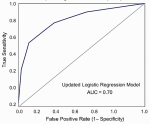
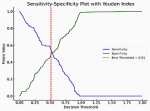
Logistic regression model for salvage surgery success: Logit (Probability of success of salvage surgery) = 0.488 - 0.054 (Occupation) + 0.048 (Religion) + 0.032 (Ethnicity) - 0.186 (Nationality) + 0.121 (referral promptness) - 0.201 (circumciser) - 0.061 (education) + 0.013 (facility) - 1.037 (hypospadias present) (Annex 1). The Model´s performance metrics, tests for model fit, multicollinearity assessment, internal validation results, and external validation results are shown in Table 5, Table 6, Figure 2, and Figure 3.
After the external validation, the regression model was updated. Based on the updated regression model, we developed the Circumcision Disaster Salvage Outcome Score (CDSOS), a bedside-friendly scoring tool using the nine predictor variables. This score, ranging from -4 to +13, translates logistic regression coefficients into practical decision points. Higher scores predict a greater likelihood of salvage success. Cut-offs were established by mapping score distributions to predicted probabilities and aligning them with observed surgical outcomes. Patients scoring ≤ 2 had <30% success probability (mostly with HY = 1), while scores ≥ 9 had >80% success probability (Annex 1).
This study presents valuable insights into the spectrum, management, and predictors of outcomes in circumcision-related complications at a regional tertiary hospital in Ghana. The findings underscore the critical roles of circumciser expertise, prompt referral, clinical and sociodemographic factors in determining the success of salvage surgical interventions (Figure 1). A complication rate of 12.4% is substantial and reflects the persistent challenges in ensuring safe circumcision practices across Ghana. This rate is notably higher than those reported in settings with universal medical circumcision protocols [1,2]. Notably, the most frequent complications -bleeding, infection, and anatomical injuries were consistent with global literature on circumcision-related mishaps [3-6]. These findings reaffirm the urgency of transitioning from traditional circumcision to medically supervised procedures, especially in rural and underserved communities. The results clearly demonstrate that urethroplasty and hypospadias repair, although essential for correcting serious anatomic anomalies, had the lowest success rates (42.9%). This poor outcome was primarily due to flap breakdown and persistent fistulas. Similar challenges have been documented in other resource-limited settings, where surgical expertise and postoperative care remain inadequate for complex urethral reconstructions [7,8]. This observation highlights the need for more skill-build-up and involvement of other more experienced pediatric urologists in such cases.
Predictors of successful salvage surgery: the type of circumciser emerged as one of the strongest predictors of outcome (χ2 = 86.83, p < 0.001). Circumcisions conducted by medical practitioners had significantly fewer complications compared to those performed by traditional circumcisers (Wanzams), consistent with other studies [9]. Traditional circumcisers often lack knowledge in sterile technique and anatomical precision, predisposing patients to complex, avoidable complications [10]. Referral timing was another powerful predictor (p < 0.001), with early referrals (within 48 hours) yielding significantly higher salvage success rates. Delay in presentation can lead to progressive tissue necrosis, infection, and fibrosis, which compromise surgical outcomes. This emphasizes the need for community education and formal referral pathways. Parental occupation (p < 0.001) and religion (p < 0.039) also had statistically significant associations with outcomes. Formal employment was associated with better outcomes, possibly reflecting improved access to healthcare and awareness of safe surgical practices for such occupations. Religious practices, particularly in communities where circumcision is ritualistic, influence the likelihood of seeking professional services, indirectly affecting complication severity and management outcomes. The interaction terms from the MANOVA (e.g., education x circumciser type and referral timing x circumciser type) both with p < 0.001, reveal important synergies. These findings suggest that educational background amplifies the benefits of choosing skilled practitioners, while early presentation enhances the impact of provider experience. This reinforces the multidimensional nature of outcomes in circumcision complications, which are influenced not only by clinical factors but also by socioeconomic and behavioral determinants.
Predictive modelling and clinical implications: the logistic regression model (Annex 1) developed in this study offers a quantitative tool for predicting salvage surgery success based on easily obtainable variables such as parental occupation, circumciser type, and timing of referral. Importantly, the inclusion of the variable 'HY', indicating the presence of hypospadias or congenital anomalies in children who were still circumcised, significantly improved model prediction. This group had the lowest salvage surgery success rates in the dataset (42.9%) and contributed a strong negative influence on outcome prediction (β = 1.037). Integrating this variable into the scoring system allowed for better risk stratification and enhanced clinical decision-making. Internal validation of the model showed that it had good calibration and acceptable discrimination (AUC = 0.70), though the accuracy was 68.2%. The Hosmer-Lemeshow test indicated good model fit (p =0.648), and pseudo-R2 metrics (0.475), reflected moderate explanatory power. Multicollinearity was not detected, and cross-validation confirmed that the model was not overfitted (Annex 1). These findings support the utility of the model as a preliminary predictive tool, though further external validation is warranted.
External validation was done using 22 anonymized complicated circumcision cases from Ghana, Nigeria, and Burkina Faso, Türkiye and the United States of America. The model was tested for predictive accuracy in real-world circumcision complication scenarios. It demonstrated a strong predictive power for successful outcomes (AUC-ROC = 0.69 for external validation) but overestimated success by failing to identify all failure cases. The presence of hypospadias (HY = 1) remained a critical negative predictor (Annex 1). These results suggest the model performs well but may require further recalibration to improve specificity and that it has potential utility as a preliminary pre-operative prognosticating tool, though further prospective external validation is warranted. When finalized, it could guide in resource maximization strategies; as well as provide a useful framework for pre-operative parental counselling when embarking on salvage surgical procedures for circumcision complications. Comparatively, the study findings align with global literature on the risks associated with non-medical circumcision practices [11,12]. However, unlike previous reports that focused mainly on clinical descriptions, this study contributes a multivariable analytical model, extending the discussion from descriptive to predictive analysis. This has implications for health policy, particularly in the areas of community sensitization and risk communication, standardization and regulation of circumcision practices, capacity-building for both medical [13] and traditional circumcisers and development of decision-support tools for frontline clinicians.
Model development and sample size: the prediction model was developed using data from 23 patients who underwent salvage surgery following circumcision-related complications. Although this represents one of the largest single-centre datasets currently available on this uncommon clinical condition in sub-Saharan Africa, the relatively small development sample limits the precision and stability of the estimated regression coefficients. Consequently, some coefficient estimates may be susceptible to sampling variability and should be interpreted with appropriate caution. Nevertheless, the rarity of severe circumcision-related complications makes the accumulation of substantially larger datasets challenging. To mitigate this limitation, the model underwent both internal validation using bootstrap resampling and external validation with independent cases from Ghana and other countries, demonstrating reasonably consistent predictive performance across datasets.
Clinical and surgical implications: the high success rates in procedures such as circumcision revision and fistula repair (100%) affirm the efficacy of early and appropriate surgical intervention. These findings support structured surgical training programs and the establishment of regional pediatric urology teams to manage complex cases. Furthermore, integrating predictive models into electronic health records or mobile applications could support clinicians in peripheral settings in deciding when to refer patients and what intervention outcomes to anticipate. Young surgeons would also be able to determine the likely outcome of salvage procedures they find themselves contending with, based on demographic and clinical predictive factors available to them prior to the surgery. Such a tool is the Clinical Decision Support on Salvage Surgery Outcomes Scoring System (CDSOS2) tool derived from the logistic regression model obtained in this study (Annex 1).
Limitations: three sets of limitations must be acknowledged. First, the retrospective design may introduce selection and reporting biases, especially in the classification of complications and outcomes. Second, the small sample size of complication cases (n = 23) limits statistical power and generalizability. Third, the regression model is still undergoing further prospective external validation, and its predictive utility must be confirmed before clinical deployment. Finally, some key variables such as severity grading of complications, postoperative follow-up duration, and the use of anesthesia or otherwise for the primary circumcision procedure were not included in the analysis. This should be done in future research as it could influence the model's accuracy. Overall, the study highlights critical factors influencing the outcomes of the management of circumcision complications and provides actionable insights into clinical practice and public health policy. The findings point to the urgent need for coordinated interventions to improve circumcision safety and optimize outcomes for affected children [13].
This study identifies key determinants influencing the outcomes of salvage surgeries following circumcision-related complications in a regional tertiary facility in Ghana. The findings establish that prompt referral, skilled surgical care, parental education, and avoidance of circumcision in children with unrecognized congenital anomalies significantly affect surgical success. Urethroplasty and hypospadias repairs had the poorest outcomes, highlighting the need for continually revamped specialist surgical expertise. The logistic regression model presented provides a valuable preliminary tool for estimating success probabilities and informing clinical decision-making. The CDSOS scoring tool derived from the model equation report document enables clinicians to estimate surgical prognosis preoperatively, contributing to improved decision-making. It could guide in resource maximization strategies; as well as provide a useful framework for pre-operative parental counselling when embarking on salvage surgical procedures for circumcision complications in resource-poor settings. Further prospective multicenter studies with larger sample sizes are, however, warranted to refine the regression coefficients, evaluate transportability across different populations, and strengthen the model's generalizability before widespread clinical implementation.
Recommendations: to the Ministry of Health and Ghana Health Service: establish national guidelines and regulatory frameworks for circumcision practices, including mandatory training and certification for all circumcisers (both medical and traditional), and strengthen surveillance systems to monitor adverse outcomes; to District Health Directorates and Regional Hospitals: ensure timely referrals through standardized protocols, train primary care providers in early complication recognition, and enhance pediatric urological capacity at referral centers; to Community Health and Public Education Units: intensify culturally sensitive public awareness campaigns on the risks of unsafe circumcision and promote medically supervised alternatives; to Academic and Research Institutions: conduct further multicenter studies to validate the predictive model and support integration of decision tools into frontline clinical practice.
What is known about this topic
- Circumcision is a widely practiced procedure in many African settings, often performed by non-medical personnel;
- Complications from circumcision can range from minor issues to severe injuries requiring reconstructive surgery;
- Salvage surgical procedures are essential in managing such complications, but outcomes vary depending on timing and expertise.
What this study adds
- Provides Ghana-specific data on the types, frequencies, and outcomes of salvage surgeries following circumcision mishaps.
- Demonstrates the predictive value of clinicopathological and sociodemographic factors on salvage surgery success;
- Introduces a validated, preliminary bedside risk calculator to support clinical decision-making in complicated circumcision cases.
The authors declare no competing interests.
Sylvester Appiah Boakye: study design, methodology, data collection, visualization, and editing. Frank Obeng: conceptualization, study design, supervision, data curation, visualization, first draft outline, and editing. All authors have read, revised, and approved the final version of this manuscript.
The authors express their profound gratitude to the Management and Staff of the Ho Teaching Hospital for granting institutional approval and providing the enabling environment for this study. We particularly acknowledge the commitment and collaborative efforts of the surgical, paediatric urology, anesthesia, and perioperative nursing teams, whose dedication to patient care and clinical excellence made this work possible. We are sincerely grateful to the staff of the Medical Records Department for their assistance in retrieving and validating patient data, as well as to the research assistants who contributed to data collection, entry, cleaning, verification, and analysis during both the model development and validation phases. The authors also wish to thank colleagues from the University of Health and Allied Sciences, particularly within the Department of Surgery, for their academic input, critical review, and methodological guidance throughout the study. We extend our deepest appreciation to all patients and their caregivers for their willingness to participate and for granting consent for the use of their clinical information for research purposes. Their contribution remains invaluable to advancing knowledge and improving surgical outcomes in this context.
Table 1: summary of outcomes of circumcision procedures
Table 2: surgical management of complications
Table 3: sociodemographic and clinical predictors of surgical outcome
Table 4: MANOVA summary - significant interactions
Table 5: model performance metrics and internal validation
Table 6: model external validation results
Figure 1: conceptual framework diagram (source; authors´ construct from literature reviewed).
Figure 2: the receiver operator characteristic (ROC) curve for the logistic regression model describing the success of salvage surgery for circumcision complications in the index study; it depicts the predictive model´s performance
Figure 3: the sensitivity-specificity plots for the logistic regression model describing the success of salvage surgery for circumcision complications in the index study; it shows the decision threshold to be 0.51
Annex 1: supplementary materials (PDF - 490KB)
- Lawal TA, Olapade-Olaopa EO. Circumcision and its effects in Africa. Transl Androl Urol. 2017;6(2):149-157. PubMed | Google Scholar
- Ahmed F, Asamoah G, Mensah S, Adjei P. Catastrophic complications of circumcision by traditional circumcisers. Open Access Emerg Med. 2021;13:425-429. PubMed | Google Scholar
- Krill AJ, Palmer LS, Palmer JS. Complications of Circumcision. ScientificWorldJournal. 2011:11:2458-68. PubMed | Google Scholar
- Siroosbakht S, Rezakhaniha B. A comprehensive comparison of the early and late complications of surgical circumcision in neonates and children: A cohort study. Health Sci Rep. 2022 Nov 21;5(6):e939. PubMed | Google Scholar
- Ouattara A, Paré A-K, Yé D, Tapsoba TL, Yaméogo A, Sanou A et al. Complications of non-medical assisted circumcision in Burkina Faso: Clinical presentation, management, and outcomes - about 23 cases and literature review. Archivio Italiano di Urologia e Andrologia. 2023;95(3):174-178. doi:10.4081/aiua.2023.3.174. PubMed | Google Scholar
- Okeke LI, Asinobi AA, Ikuerowo OS. Epidemiology of complications of male circumcision in Ibadan, Nigeria. BMC Urol. 2006 Aug 25:6:21. PubMed | Google Scholar
- Appiah KAA, Gyasi-Sarpong CK, Azorliade R, Aboah K, Laryea DO, Otu-Boateng K et al. Circumcision-related tragedies seen in children at the Komfo Anokye Teaching Hospital, Kumasi, Ghana. BMC Urol. 2016;16(1):1-8. PubMed | Google Scholar
- Snodgrass W, Bush N. Recent advances in understanding and management of hypospadias.F1000Prime Rep. 2014 Nov 4:6:101. PubMed | Google Scholar
- Bailey RC, Egesah O, Rosenberg S. Male circumcision for HIV prevention: A prospective study of complications in clinical and traditional settings in Bungoma, Kenya. Bull World Health Organ. 2008;86(9):669-677. PubMed | Google Scholar
- Osifo OD, Oriaifo IA. Circumcision mishaps in Nigerian children. Ann Afr Med. 2009;8(4):266-270. PubMed | Google Scholar
- Morris BJ, Wamai RG, Henebeng EB, Tobian AA, Klausner JD, Banerjee J et al. Estimation of country-specific and global prevalence of male circumcision. Popul Health Metr. 2016;14(1):4. PubMed | Google Scholar
- Anttila A, Lahdes-Vasama T, Pakkasjärvi N, Taskinen S. Cumulative reoperation rates during follow-up after hypospadias repair. BJU Int. 2024 Dec;134(6):960-966. PubMed | Google Scholar
- Maison P, Yahaya I, Appiah K, Ekor O, Apraku C, Egyir E. Circumcision practice among trained circumcisers in Ghana. African Urol. 2023 Jan 1;3(1):35-8. Google Scholar
Search

This article authors
On Pubmed
On Google Scholar
Citation [Download]
Navigate this article
Similar articles in
Key words
Tables and figures

Article metrics
Recently from the PAMJ-CM