Idiopathic granulomatous mastitis: a diagnostic pitfall mimicking recurrent breast abscess
Salah Houda, Skouri Wafa
Corresponding author: Salah Houda, Department of Gynecology and Obstetrics of Nabel, University of Tunis El Manar, Faculty of Medicine of Tunis, Tunis, Tunisia 
Received: 14 Jul 2026 - Accepted: 04 Sep 2026 - Published: 14 Sep 2026
Domain: Gynecology
Keywords: Breast, mastitis, granulomatous
Funding: This work received no specific grant from any funding agency in the public, commercial, or non-profit sectors.
©Salah Houda et al. PAMJ Clinical Medicine (ISSN: 2707-2797). This is an Open Access article distributed under the terms of the Creative Commons Attribution International 4.0 License (https://creativecommons.org/licenses/by/4.0/), which permits unrestricted use, distribution, and reproduction in any medium, provided the original work is properly cited.
Cite this article: Salah Houda et al. Idiopathic granulomatous mastitis: a diagnostic pitfall mimicking recurrent breast abscess. PAMJ Clinical Medicine. 2026;22:4. [doi: 10.11604/pamj-cm.2026.22.4.54476]
Available online at: https://www.clinical-medicine.panafrican-med-journal.com//content/article/22/4/full
 PDF in process
Images in clinical medicine 

Idiopathic granulomatous mastitis: a diagnostic pitfall mimicking recurrent breast abscess
Idiopathic granulomatous mastitis: a diagnostic pitfall mimicking recurrent breast abscess
Salah Houda1,&,  Skouri Wafa2
&Corresponding author

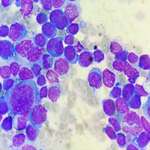
A 32-year-old woman with no significant medical history was treated on two occasions for a left breast abscess. She underwent two surgical drainage procedures combined with broad-spectrum antibiotic therapy, but without lasting improvement. Given the early recurrence of symptoms, the appearance of cutaneous fistulas, and diffuse inflammatory induration of the breast, a surgical biopsy was performed to rule out breast carcinoma or a specific infection (such as tuberculosis). Histopathological examination revealed a polymorphous inflammatory infiltrate granulomatous and lipophagic in nature centered on the breast lobules, with Langhans-type giant cells but no caseous necrosis or malignancy; this confirmed the diagnosis of idiopathic granulomatous mastitis (IGM). Infectious workups (testing for acid-fast bacilli, as well as bacterial and fungal cultures) were negative. The patient was treated with oral corticosteroids (prednisolone at 0.5 mg/kg/day) for 4 weeks, followed by a gradual taper. The clinical course was marked by an excellent response, complete healing of the fistulous lesions, and resolution of the inflammatory mass, with no recurrence at a 6-month follow-up. Idiopathic granulomatous mastitis is a rare, benign inflammatory condition of the breast that primarily affects young women of reproductive age. Diagnosis is established via histopathology after ruling out infectious causes (such as tuberculosis in endemic areas) and neoplastic disease. It often presents a therapeutic challenge; systemic corticosteroid therapy serves as an effective alternative to invasive surgery, reducing the risk of breast deformity and recurrence.
Figure 1: histopathological section of granulomatous mastitis
Search

This article authors
On Pubmed
On Google Scholar
Citation [Download]
Navigate this article
Similar articles in
Key words
Tables and figures

Article metrics
Recently from the PAMJ-CM