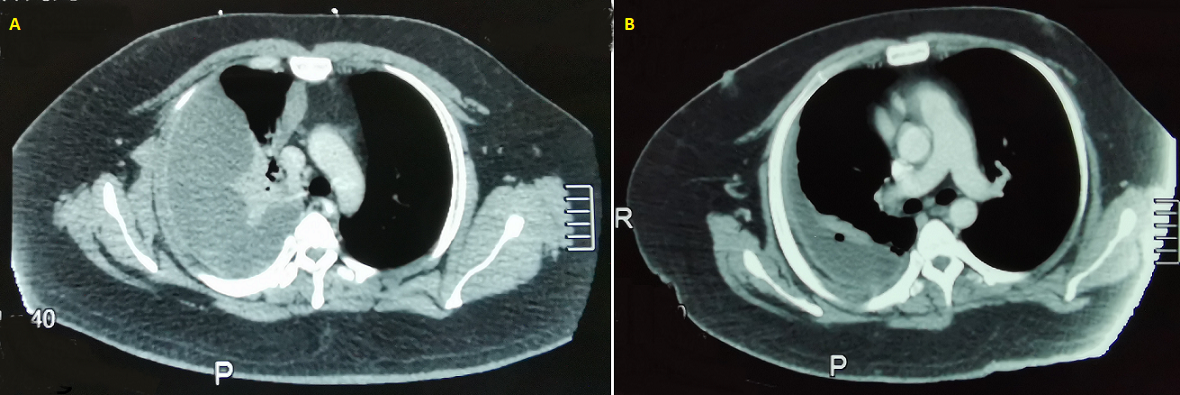
A 30-year-old male with a background of diabetes mellitus, hypertension, and obesity presented with a 2-week history of cough, associated with fever and breathlessness for one day. Auscultation of the lung revealed markedly reduced breath sound of the right lung. Contrast-enhanced CT of the thorax showed a gross right pleural effusion with associated atelectasis of the entire right lung (A). A pleural pigtail catheter was inserted in which a copious amount of purulent material was drained. Transthoracic echocardiography revealed normal cardiac contractility with the absence of vegetation. His blood culture yielded <i>Enterococcus faecium</i>, only susceptible to vancomycin, while cultures of the pleural fluid and sputum were negative. As a result, he was treated with intravenous vancomycin, with dosage adjustment made based on the therapeutic drug monitoring (aim for trough level = 15-20 mg/L). His condition improved with intravenous vancomycin, which was given for a total duration of 6 weeks. Repeated thoracic CT at a one-month interval showed improving right pleural effusion (B). He was also referred to the cardiothoracic surgeon for decortication because of the residual empyema. <i>E. faecium</i> is a Gram-positive, commensal bacterium inhabiting the gastrointestinal tracts of humans and other mammals. <i>E. faecium</i> is a rare cause of empyema. This case illustrates the development of i>E. faecium</i> empyema in a young patient with multiple co-morbid conditions. Pleural space infection caused by i>E. faecium</i> requires pleural drainage and intravenous vancomycin for treatment.
Corresponding Author
Chee Yik Chang, Medical Department, Hospital Sultanah Aminah, Jalan Persiaran Abu Bakar Sultan, 80100 Johor Bahru, Johor, Malaysia (ccyik28@gmail.com)