Day-case holmium laser enucleation of the prostate: the first reported Nigerian case
Celsus Ukelina Undie, Adeyemi Oluwatobi Akano, Lucy Oyine Idoko, Kenechi Stanislaus Nedosa, Cassandra Ijeoma Offor,, Manshak Iliya Dimlong, Odezi Fidelis Otobo, Getachew Teka Aklilu, Abasiomokop Gabriel Etuk, Calistus Chiemezie Onyishi, Carter Alfa Odumeke, Nnenna Olughu Ama
Corresponding author: Celsus Ukelina Undie, Department of Urology, Kelina Hospital Abuja, Abuja, Nigeria 
Received: 13 Apr 2026 - Accepted: 13 May 2026 - Published: 26 Jun 2026
Domain: Urology
Keywords: Prostate holmium laser enucleation, benign prostatic hyperplasia, day-case surgery, lower urinary tract symptoms, case report
Funding: This work received no specific grant from any funding agency in the public, commercial, or not-for-profit sectors.
©Celsus Ukelina Undie et al. PAMJ Clinical Medicine (ISSN: 2707-2797). This is an Open Access article distributed under the terms of the Creative Commons Attribution International 4.0 License (https://creativecommons.org/licenses/by/4.0/), which permits unrestricted use, distribution, and reproduction in any medium, provided the original work is properly cited.
Cite this article: Celsus Ukelina Undie et al. Day-case holmium laser enucleation of the prostate: the first reported Nigerian case. PAMJ Clinical Medicine. 2026;21:14. [doi: 10.11604/pamj-cm.2026.21.14.52700]
Available online at: https://www.clinical-medicine.panafrican-med-journal.com//content/article/21/14/full
Case report 

Day-case holmium laser enucleation of the prostate: the first reported Nigerian case
Day-case holmium laser enucleation of the prostate: the first reported Nigerian case
Celsus Ukelina Undie1,&,  Adeyemi Oluwatobi Akano2, Lucy Oyine Idoko2, Kenechi Stanislaus Nedosa3, Cassandra Ijeoma Offor,3 Manshak Iliya Dimlong3, Odezi Fidelis Otobo 1, Getachew Teka Aklilu1, Abasiomokop Gabriel Etuk3, Calistus Chiemezie Onyishi3, Carter Alfa Odumeke3, Nnenna Olughu Ama4
&Corresponding author
This case report describes a 63-year-old man with benign prostatic hyperplasia (BPH) who has had day case holmium laser enucleation of the prostate (HoLEP) at Kelina Hospital. He presented with lower urinary tract symptoms (LUTS), international prostate symptom score (IPSS) score of 25, prostate size of 45.54g, and maximum urine flow rate (Qmax) of 5.6ml/s. HoLEP was performed under regional anaesthesia, with same-day catheter removal after 6 hours and discharge without complications. At 12-week follow-up, there was significant improvement in Qmax (36.1ml/s) and IPSS (10). The authors considered it important to report this Day-case HoLEP as it is feasible, safe, and effective for selected patients with small prostates, and for this reason, it could reduce cost of health care and hospital stay for the patient. This is the first day-case HoLEP to be reported in Nigeria.

Benign prostatic hyperplasia (BPH symptoms) is a relatively common condition in men associated with aging and is one of the most prevalent causes of lower urinary tract symptoms in older males [1]. The disease prevalence has been shown to increase with advancing age [1]. The histological prevalence of BPH at autopsy is as high as 50% to 60% for males in their 60s, increasing to 80% to 90% for those older than 70 years of age [1]. Benign prostatic hyperplasia (BPH) occurs when the cells in the prostate, or the tissue surrounding the urethra, start to grow in their stromal and epithelial cells. This causes the compression of the urethra and bladder outflow obstruction, causing LUTS or sometimes complete bladder retention and/or urinary tract infection due to incomplete voiding [2]. Many less invasive options to prostate surgery have become more popular. In recent years. Prostate surgery techniques have evolved over time; from open to minimally invasive approaches [3]. These are aimed at improving patients´ health, minimizing complications, and reducing hospital stay [4].
In recent years, a number of methods that avoid the surgery for the prostate have become popular. Over the years the techniques for prostate surgery have changed; from open to minimally invasive, all of which offer the patient health benefits, less morbidity, less mortality, shorter operating times and the potential to be outpatient procedures, along with faster rehabilitation [5]. Holmium laser enucleation of the prostate (HoLEP) has developed as an alternative to transurethral resection of the prostate (TURP) for the treatment of benign prostatic hyperplasia (BPH) [3]. Holmium laser enucleation of the prostate became available in 1998 by Gilling et al. [4] and was described as the new gold standard in surgical treatment of BPH because of its effectiveness, safety and applicability regardless of prostate size. Since then, it came to be considered as a safe and effective method for treatment of BPH [5] and a preferred alternative to open prostatectomy or TURP [6]. HoLEP has been recommended as the gold standard for treating patients with lower urinary tract symptoms due to benign prostatic enlargement [7], and has been shown to be a better alternative to more invasive interventions like open or robot-assisted simple prostatectomy [5] in the treatment of larger (>80 g) prostate sizes, with comparable, if not superior, postoperative results and lower transfusion and retreatment rates than TURP [5]. The evidence available indicates that HoLEP can be carried out as a day-case procedure in an appropriate patient [8]. Research has shown that low readmission rates are achieved, especially in patients who have a smaller prostate, and in surgeries that are done early in the day [8]. This information highlights the need for careful patient selection and planning prior to a day case HoLEP programme [8].

Patient information: a 63-year-old hotelier with a background history of hypertension presented to our facility. He was generally healthy and had no other comorbidities. His vital signs were normal, and his BMI was 26.7kg/m.
Clinical findings: he presented with lower urinary tract symptoms (LUTS), including urinary frequency, poor urinary stream, straining, feeling of incomplete emptying of the bladder, and nocturia. His IPSS was 25. A digital rectal examination revealed an enlarged prostate with benign features.
Timeline: the patient first presented to Kelina Hospital on August 23, 2025, following an evaluation at clinix that noted an enlarged prostate. He reported lower urinary tract symptoms (LUTS) with an international prostate symptom score (IPSS) of 25 and a prostate-specific antigen (PSA) level of 0.62 ng/mL. He had known hypertension managed with amlodipine (Norvasc 10 mg) and telmisartan (Micardis 80 mg), achieving good blood pressure control. Comprehensive laboratory and radiological investigations were ordered. On August 26, 2025, review of results revealed a pre-void bladder volume of 357 mL, post-void residual of 135 mL, prostate volume of 45.54 g, maximum flow rate (Qmax) of 5.9 mL/s with an obstructive uroflowmetry pattern, serum creatinine of 1.2 mg/dL, and fasting blood sugar (FBS) of 6.2 mmol/L. The patient was counseled on holmium laser enucleation of the prostate (HoLEP), including fertility implications. Having completed his family size, he consented to surgery. Hemoglobin A1c (HbA1c) testing was requested due to elevated FBS; results will be reviewed at the next visit. On September 3, 2025, the patient was reviewed, accepted for surgery, and received preoperative nitrazepam. holmium laser enucleation of the prostate (HoLEP) was performed successfully the following day (September 4, 2025), with same-day discharge and a postoperative follow-up scheduled for October. The patient returned for postoperative review on October 20, 2025, and was asked to complete additional tests, returning five days later (October 25, 2025) for result evaluation. All postoperative results were excellent and improved compared to preoperative values. A follow-up appointment was scheduled one year post-surgery.
Diagnostic assessment: total prostate specific antigen (PSA) was 0.506ng/ml and free PSA was 0.13ng/ml. Ultrasound scan revealed an estimated prostate volume of 45.54g with intravesical protrusion. The pre- and post- void urine volumes were 357ml and 135ml, respectively. Uroflowmetry showed an obstructive voiding pattern (Qmax 5.6ml/s). Serum creatinine was 1.2mg/dl (0.7 - 1.2). Blood parameters, including clotting profile, were normal. Histology of the prostate removed showed benign prostatic hyperplasia.
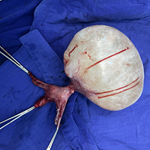
Therapeutic intervention: he was counselled on the pathology and available treatment options. Patient opted for HoLEP. This was performed under regional anaesthesia with a 22F 3-way Foleys catheter left at the end of the procedure for irrigation. Urine remained clear, and the urethral catheter was removed 6 hours after surgery.
Follow-up and outcomes: indwelling catheter was removed on the same day, 6 hours after surgery, and the patient voided satisfactorily with a good urine stream and no bleeding. He was subsequently discharged home later the same day in stable condition. He remained in contact with the hospital and did not have any complaints after discharge. There were no complications or unusual symptoms that developed after discharge from the hospital. At 12 weeks post-surgery, the patient reported optimal recovery. Residual prostate size was 15g, down from 45.54g before surgery. Post-void urine volume improved from 135ml to 5.45 ml. Uroflowmetry showed improved urinary stream (Qmax from 5.6ml/s to 36.1 ml/s). International prostate symptom score (IPSS) improved from 25 to 10, and the patient reported satisfaction with urinary function.
Patient perspective: the patient reported satisfaction with urinary function at the 6th month post-operative visit to the hospital.
Informed consent: written informed consent was obtained and documented with date and time from the patient for publication.
There have been several decades of continuous development that have led to the evolution of the minimal treatment procedure for BPH, such as HoLEP. We reported a 63-year-old male patient who was treated with day-case HoLEP at Kelina Hospital, demonstrating its feasibility and efficacy in a clinical setting. His symptoms were easily detectable with a large International prostate symptom score (IPSS) of 25, illustrating the severity of his symptoms. These affected his quality of life (QoL), and his QoL score was 5. Clinical assessment revealed an enlarged prostate, estimated at 45.54g, with additional complications such as an obstructive voiding pattern and significant post-void residual urine. Larner et al. [9] published the first results of the day surgery management of HoLEP in 2003, which included 38 patients, prostate size < 60g. There have been a few studies that have focused on same-day discharge in select patients, usually in a smaller prostate gland. This case exemplifies successful day-case management, as the patient was discharged just six hours post-operation with clear urine, satisfactory voiding, and no complications. According to literature, factors such as the size of the prostate and the timing of surgery significantly influence the success of same-day discharge [7].
Patients with lower prostate volumes and early morning procedures demonstrated the highest likelihood of achieving same-day catheter removal [7]. Larner et al. demonstrated early experience with day-case HoLEP reporting favorable outcomes, and more cohort analyses confirm that day-case HoLEP can be done and is a safe procedure with successful same-day discharge and good complication rates as this experience grows [9]. A critical aspect of this case is the choice of anaesthesia. Regional anaesthesia not only facilitated a smoother perioperative experience but also minimized the stress associated with surgery [7]. The ability to maintain effective pain control while allowing for rapid recovery is a significant consideration in day-case surgeries [7]. Patient satisfaction following anaesthesia plays a crucial role in overall surgical success. The patient´s residual prostate tissue was only 15 g. His improved Qmax values (from 5.6 to 36.1 ml/s) and reduction in post-void residual volume to 5.45 ml signified marked measurable improvement. Day-case HoLEP could help decrease bed congestion, healthcare expenses, and improve the overall patient experience.
This case report successfully demonstrates the feasibility and efficacy of day-case holmium laser enucleation of the prostate (HoLEP) at Kelina Hospital for managing symptomatic benign prostatic hyperplasia (BPH) in a 63-year-old patient with a 45.54 g prostate. Performed under regional anesthesia, the procedure allowed catheter removal just 6 hours postoperatively, same-day discharge without complications, and remarkable 12-week outcomes including prostate volume reduction to 15 g, Qmax improvement from 5.6 mL/s to 36.1 mL/s, post-void residual drop to 5.45 mL, and IPSS score decrease from 25 to 10, alongside high patient satisfaction. These results align with existing literature on HoLEP's superiority over TURP in terms of shorter stays, lower retreatment rates, and cost efficiencies, particularly beneficial in resource-constrained settings like Nigeria where it can alleviate bed shortages and healthcare expenses. Day-case HoLEP thus emerges as a safe, size-independent option for appropriately selected patients with smaller glands, supported by factors such as morning scheduling and regional anesthesia. Future research should involve larger prospective studies to expand its application to diverse profiles, refine selection criteria, and promote wider adoption across African urology centers.
The authors declare no competing interests.
Celsus Ukelina Undie: conceptualization, critical revision, and supervision. Adeyemi Oluwatobi Akano: drafted manuscript, manuscript formatting, and submission to the journal. Lucy Oyine Idoko: manuscript drafting. Kenechi Stanislaus Nedosa: critical revision. Cassandra Ijeoma Offor, Manshak Iliya Dimlong, Odezi Fidelis Otobo, Getachew Teka Aklilu, Abasiomokop Gabriel Etuk, Calistus Chiemezie Onyishi, Carter Alfa Odumeke, Nnenna Olughu Ama: critical revision. All the authors have read and approved the final version of this manuscript.
The authors thank the participant for giving the consent to publish the clinical details of the procedure and also thank the clinical staff of Kelina Hospital for their excellence care of the patient during the surgery.
- Ng M, Baradhi KM. Benign prostatic hyperplasia. Treasure Island (FL): StatPearls Publishing; 2024. PubMed | Google Scholar
- Roehrborn CG. Pathology of benign prostatic hyperplasia. Int J Impot Res. 2008 Dec;20 Suppl 3:S11-8. PubMed | Google Scholar
- Bui TL, Glavis-Bloom J, Chahine C, Mehta R, Wolfe T, Bhatter P et al. Prostate minimally invasive procedures: complications and normal vs. abnormal findings on multiparametric magnetic resonance imaging (mpMRI). Abdom Radiol (NY). 2021 Sep;46(9):4388-4400. PubMed | Google Scholar
- Gilling PJ, Cass CB, Cresswell MD, Malcolm AR, Fraundorfer MR. The use of the holmium laser in the treatment of benign prostatic hyperplasia. J Endourol. 1996 Oct;10(5):459-61. PubMed | Google Scholar
- Cornu JN, Ahyai S, Bachmann A, de la Rosette J, Gilling P, Gratzke C et al. A Systematic Review and Meta-analysis of Functional Outcomes and Complications Following Transurethral Procedures for Lower Urinary Tract Symptoms Resulting from Benign Prostatic Obstruction: An Update. Eur Urol. 2015 Jun;67(6):1066-1096. PubMed | Google Scholar
- Undie CU, Nnana EI, Torporo KR. Initial experience with holmium laser enucleation of the prostate in a urology specialist hospital in Nigeria. AFR J UROL. 2021 Dec;27(1):88. Google Scholar
- Elzayat EA, Habib E, Elhilali MM. Holmium laser enucleation of the prostate: A size-independent new “gold standard.” Urology. 2005 Nov 1;66(5):108-13. PubMed | Google Scholar
- Lee S-M, Gordon K, McMillan R, Crystal F, Acher P. Day-case holmium laser enucleation of the prostate: feasibility, safety and predictive factors. Ann R Coll Surg Engl. 2018 Jul;100(6):475-479. PubMed | Google Scholar
- Larner TRG, Agarwal D, Costello AJ. Day-case holmium laser enucleation of the prostate for gland volumes of < 60 mL: early experience. BJU International. 2003 Jan;91(1):61-4. PubMed | Google Scholar
Search

This article authors
On Pubmed
On Google Scholar
Citation [Download]
Navigate this article
Similar articles in
Key words
Article metrics
Recently from the PAMJ-CM